University of BahrainCollege of Information TechnologyDepartment of Computer Engineering
Smart Medication Tracker and Automated Dispenser for EldercareTheir Health Is Always Our Priority
AbstractThe Smart Medication Tracker and Automated Dispenser for Eldercare is designed to support elderly individuals by ensuring timely, accurate, and safe medication intake. Medication non-adherence is a common challenge among older adults, often leading to health complications and increased reliance on caregivers. This project addresses these challenges by combining automated medication dispensing with real-time tracking and user-friendly feedback.The system is built around an ESP32-C3 microcontroller and features seven automatic dispensing compartments for daily medications and one manual compartment for emergency use. Object-detection sensors verify medication dispensing, while a buzzer, NeoPixel LED strip, and LCD display provide clear visual, audio, and textual feedback to guide users. Manual dispensing can be activated through physical buttons when immediate access to medication is required.By integrating automation, IoT connectivity, and remote monitoring through a mobile application, the system helps caregivers and healthcare providers track and manage medication schedules efficiently. Overall, the solution improves medication adherence, enhances safety, reduces caregiver burden, and promotes independent living for elderly individuals through reliable and intelligent technology.
Objectives
Ensure timely and accurate medication intake through automated and manual dispensing.
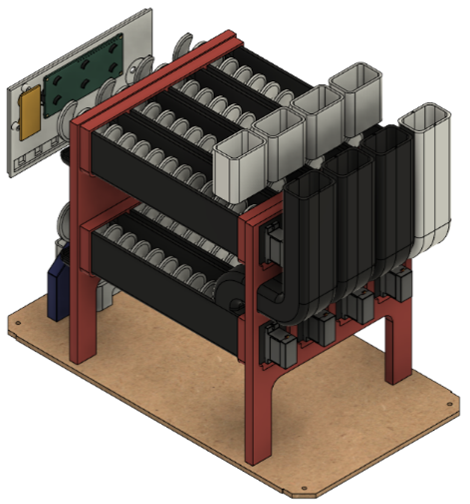
Provide a dual-compartment system with automatic daily slots and a manual emergency slot.
Improve safety and user awareness using visual, audio, and on-screen feedback.
Enable remote monitoring and schedule management through a mobile application.
Reduce medication errors and caregiver effort while supporting independent living through smart automation.
MethodologySimple system architecture diagram
System Architecture Design
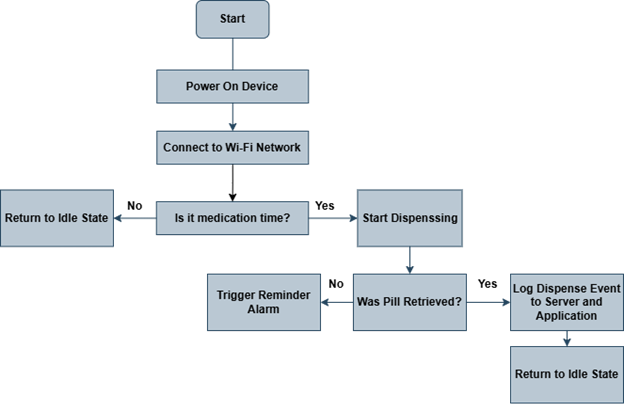
Device Operation Flowchart
Mobile Application Flowchart
Refilling Flowchart
Tools and Frameworks used
The mobile application was developed using the .NET framework due to its cross-platform capabilities, high performance, and secure communication support. The application is deployed on Android devices to provide caregivers with reliable and immediate access to the medication dispenser.
To ensure scalability and maintainability, the application follows a three-layer architecture, consisting of a User Interface (UI) layer for user interaction, an Application Programming Interface (API) layer for data exchange, and a Background Service layer responsible for device communication and synchronization.
Development Approach
The mobile application was developed using the .NET framework due to its cross-platform capabilities, high performance, and secure communication support. The application is deployed on Android devices to provide caregivers with reliable and immediate access to the medication dispenser.To ensure scalability and maintainability, the application follows a three-layer architecture, consisting of a User Interface (UI) layer for user interaction, an Application Programming Interface (API) layer for data exchange, and a Background Service layer responsible for device communication and synchronization.
Datasets and Hardware
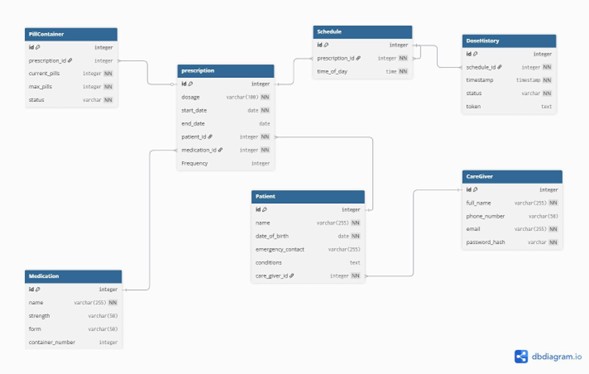
Database Set
Hardware Parts
Technologies
C Language
Arduino IDE
.NET Maui Blazor
PostgreSQL
ESP32
LCD
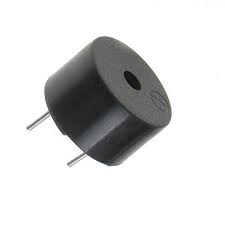
Buzzer
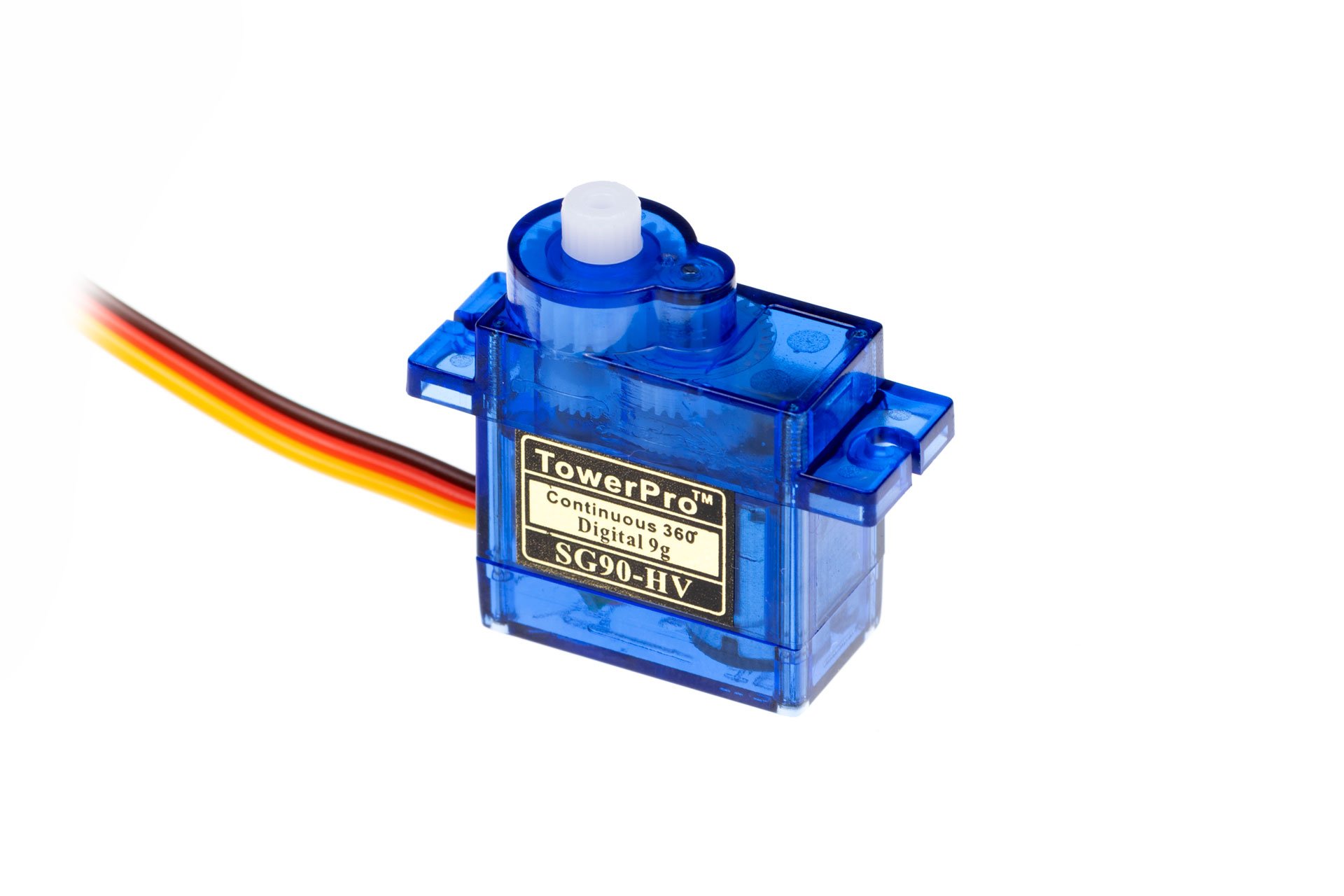
Servo motor 360 continuous rotation
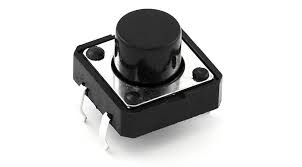
Push Button
Results
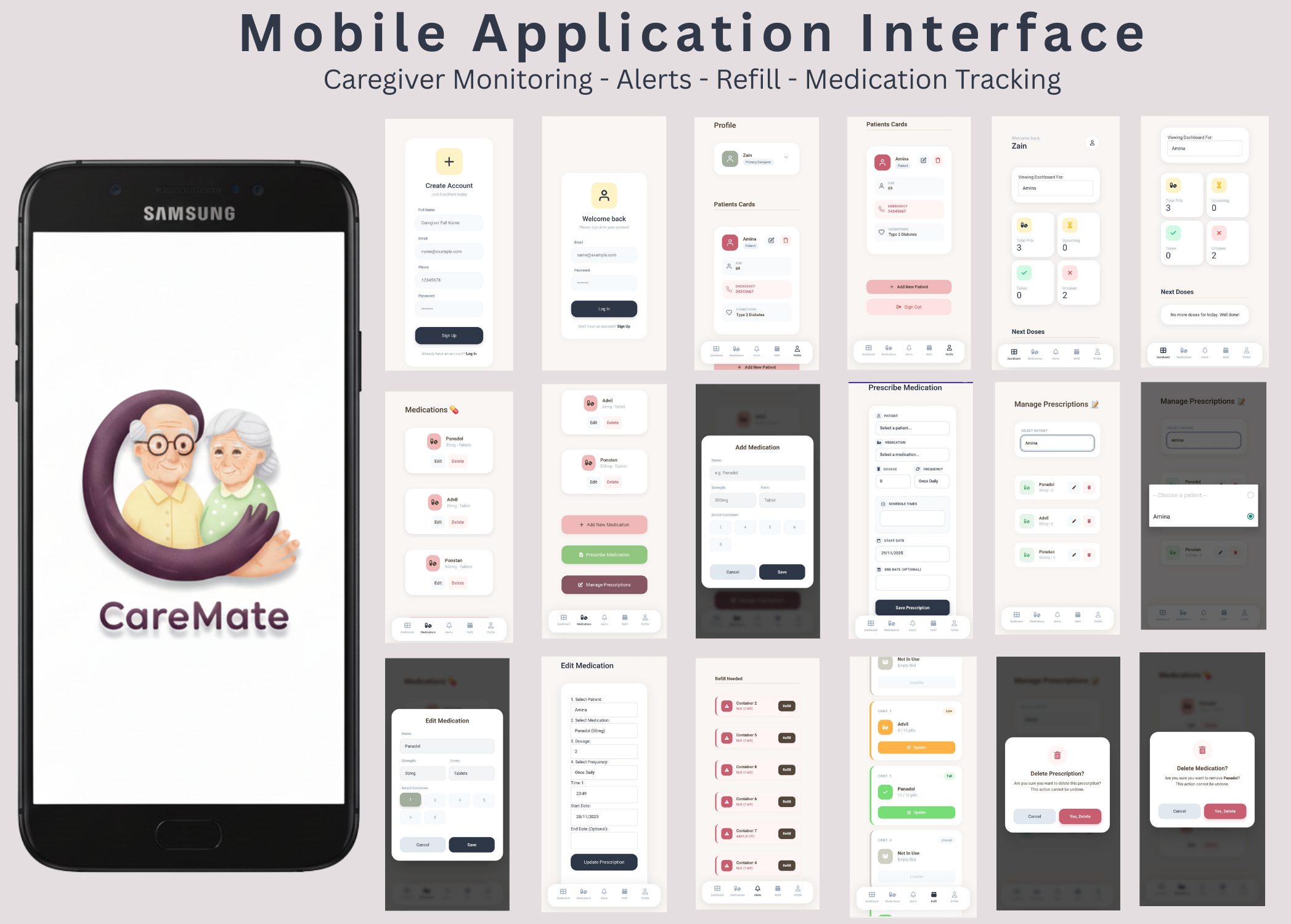
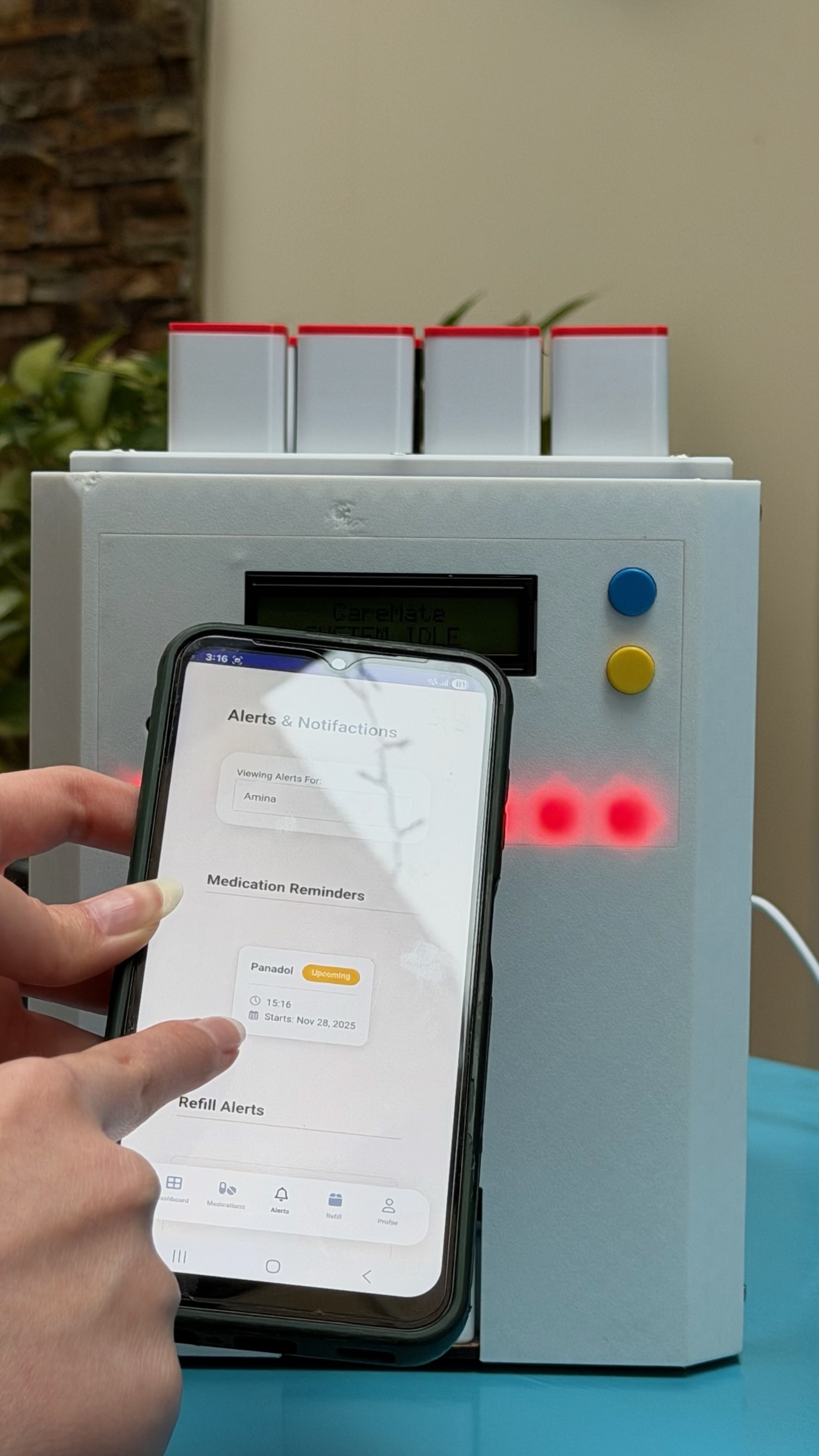
App UI
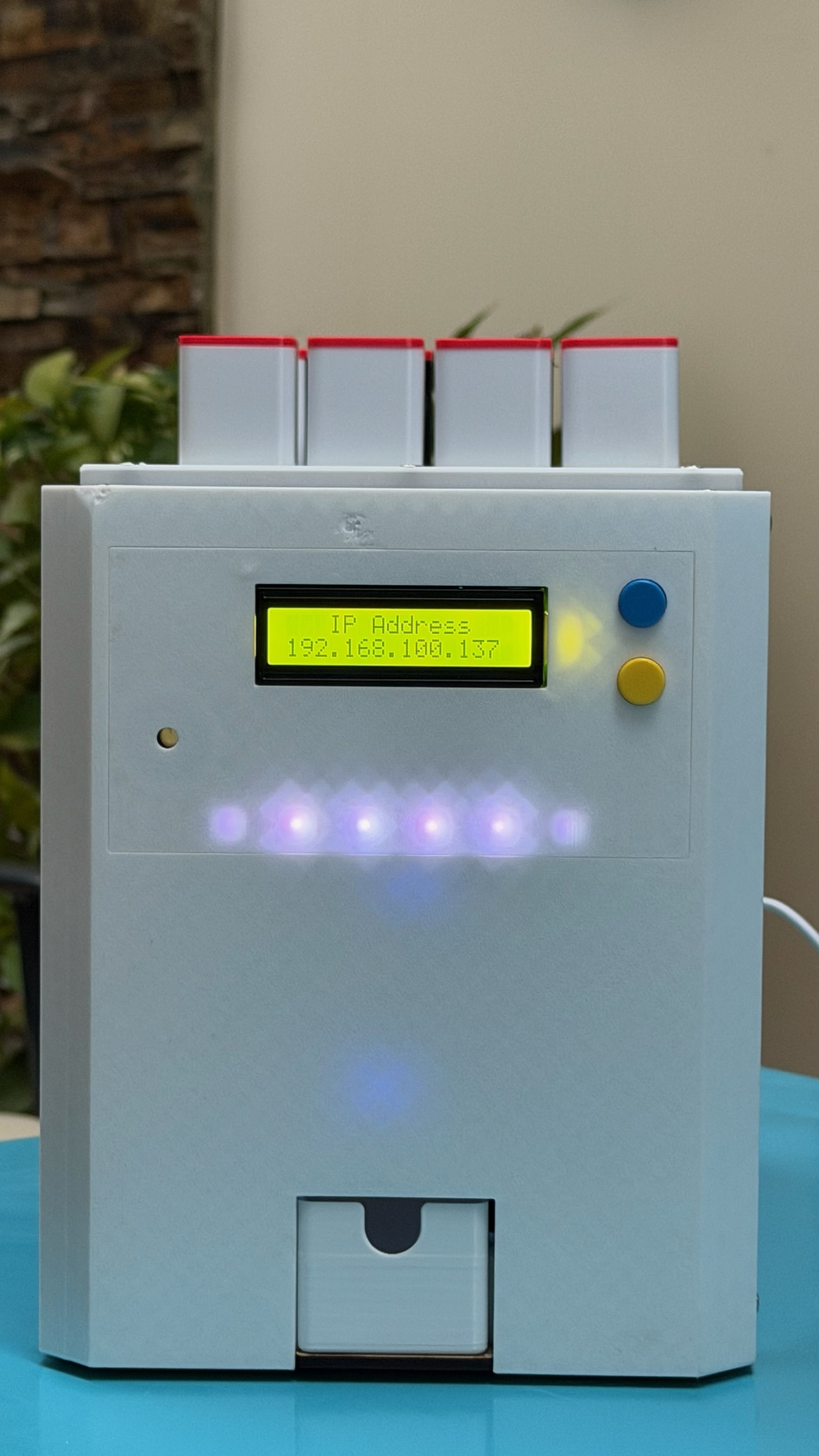
Searching for a reliable Wi-Fi Connection
Connected to the Wi-Fi
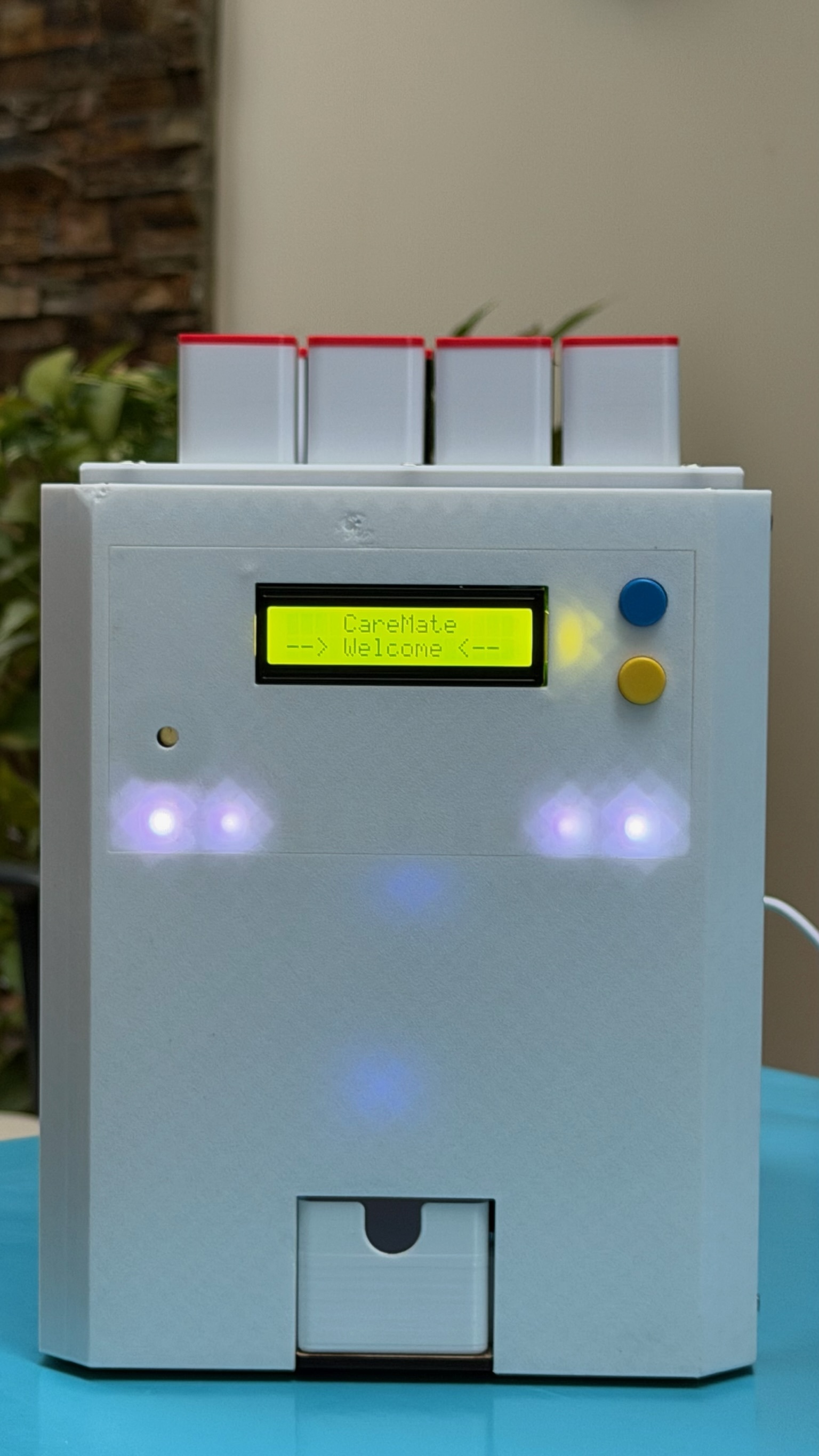
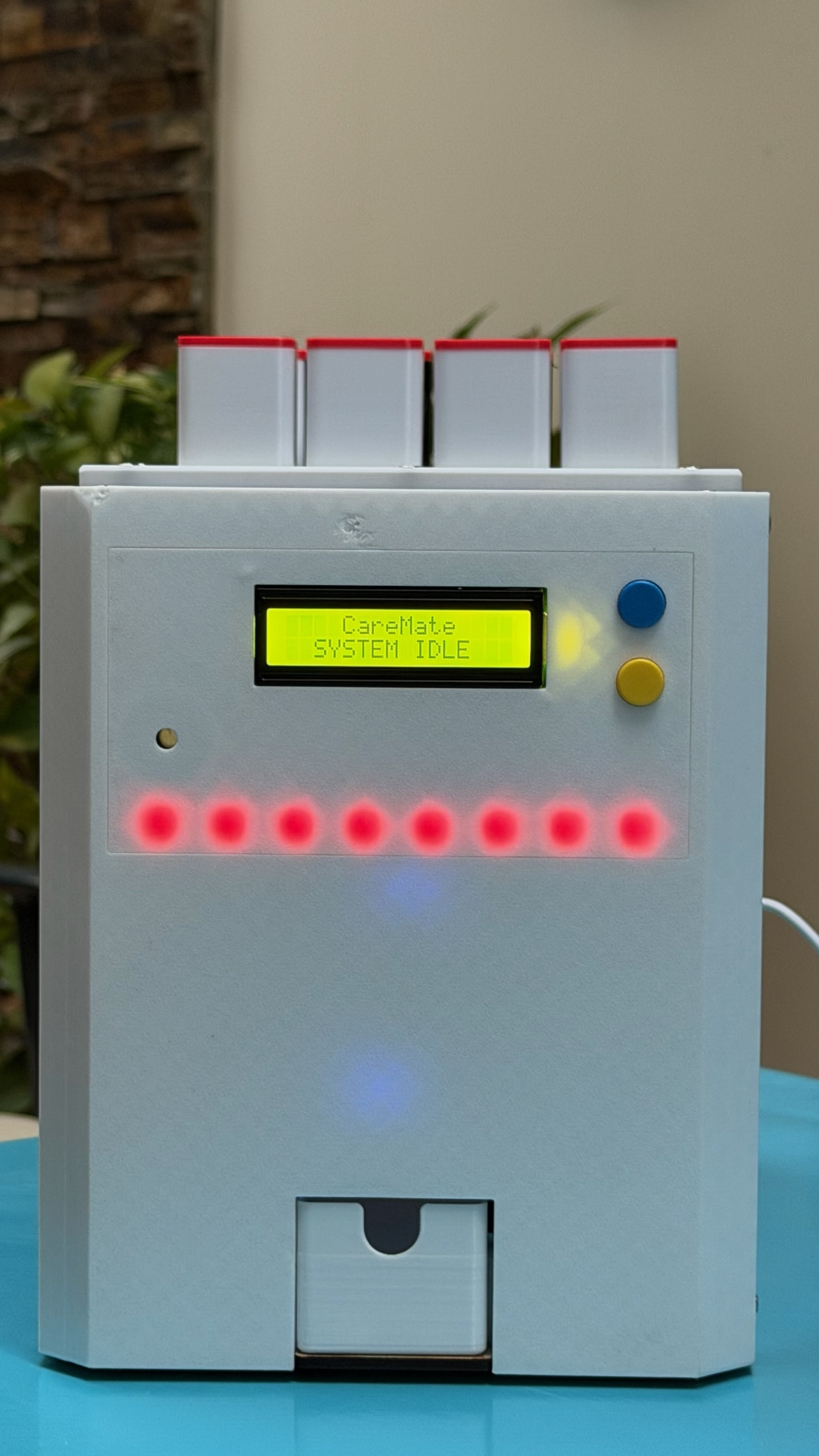
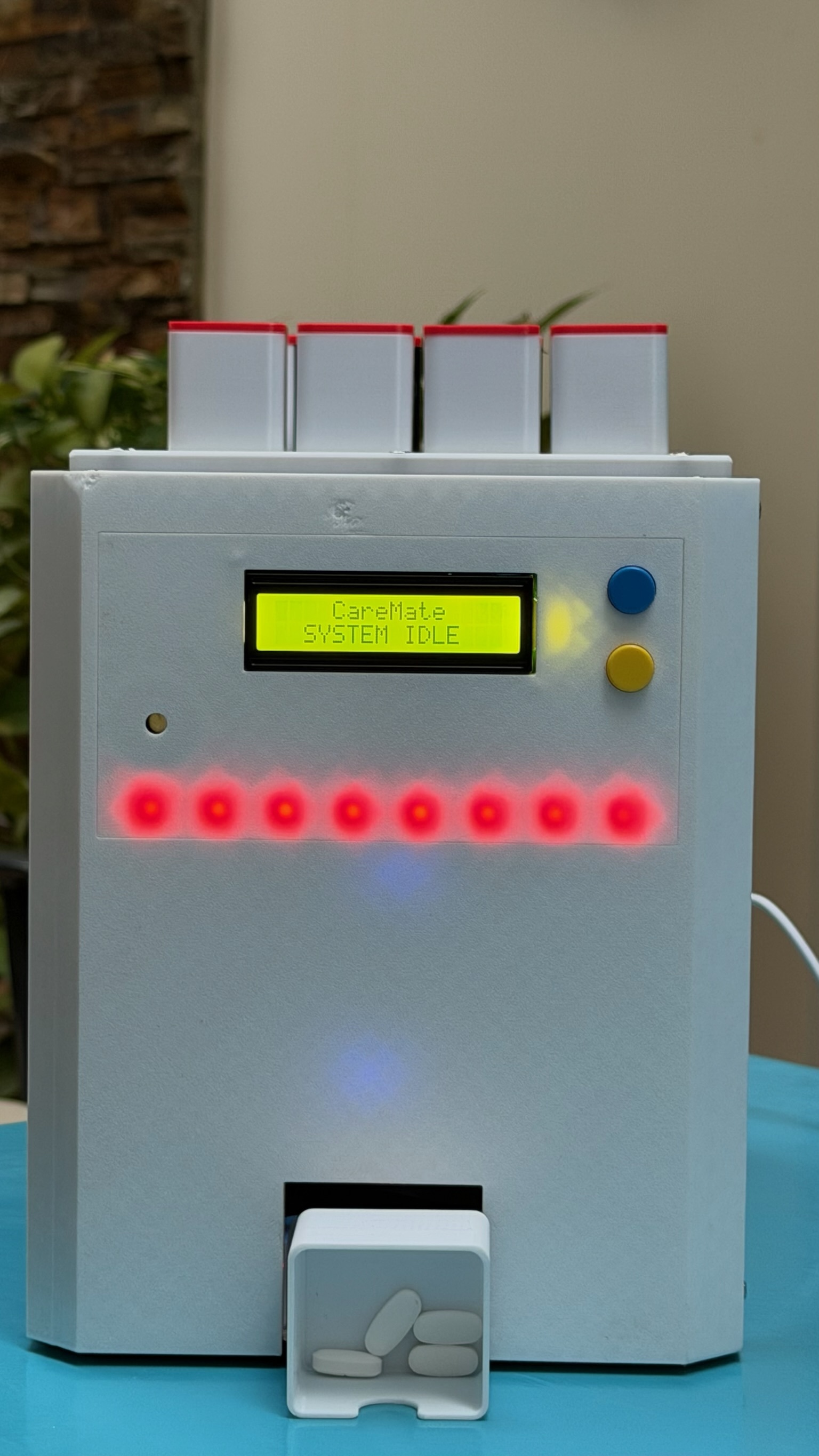
System Idle
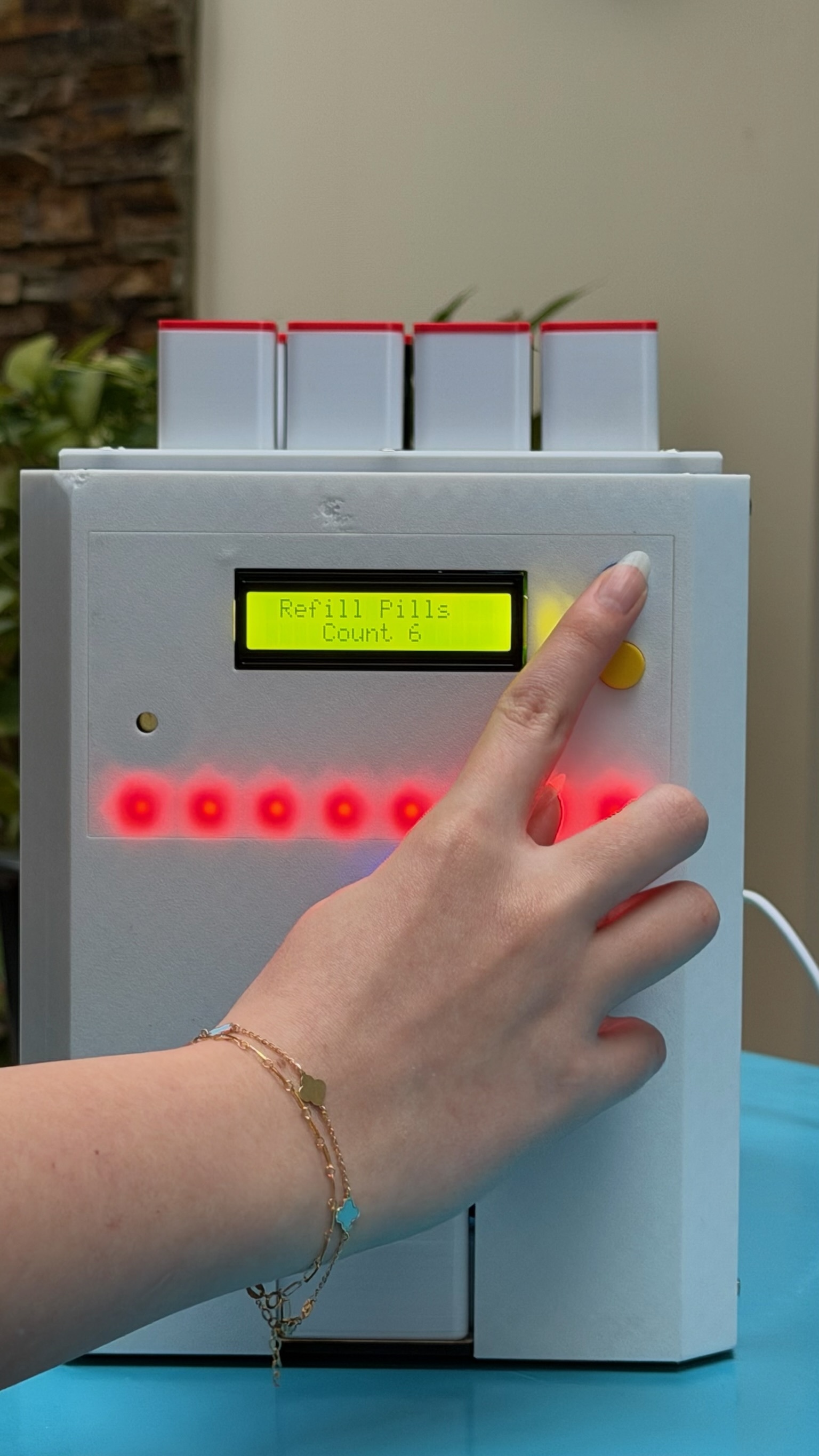
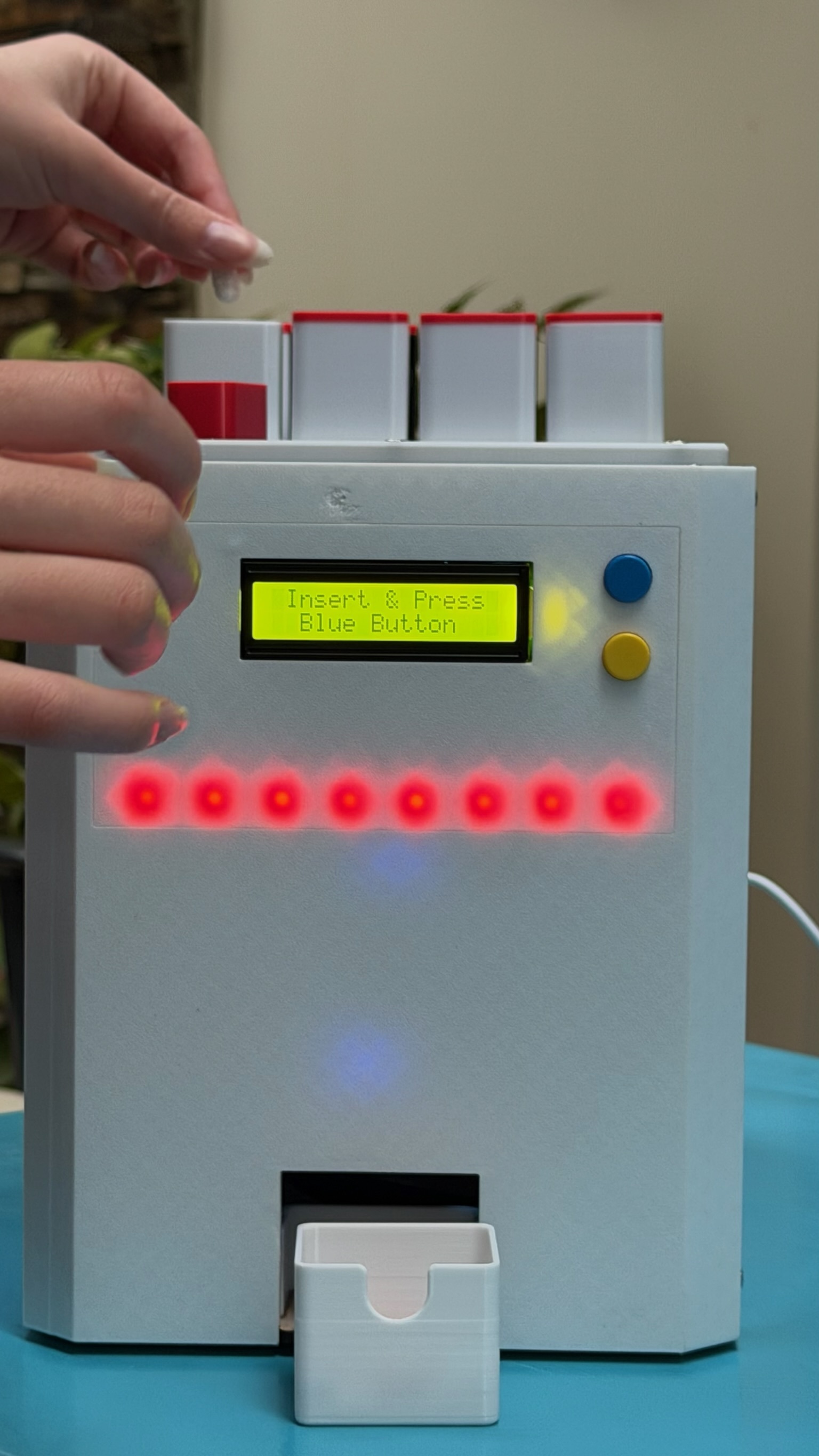
Choosing the right container to refill
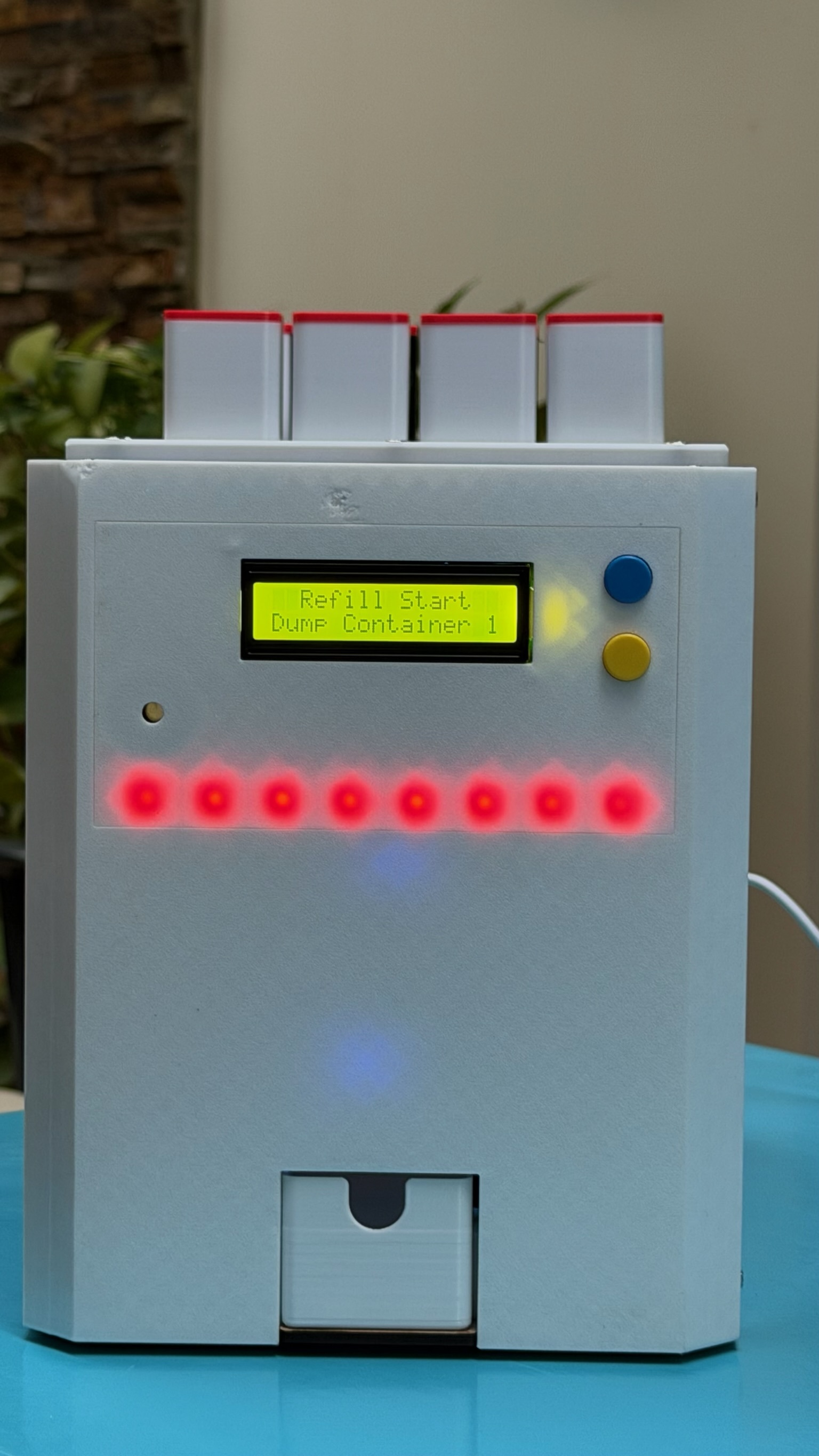
Dumping all pills function
Refilling the Chosen Container
Configuring the Application with the Device
Medication Dispensing
Medication Dispensed
Pills Dispensed
Demo
English Elevator Pitch
Arabic Elevator Pitch
Live Demo
Conclusion & Future WorkThe project successfully created and tested an automated, IoT-enabled medication dispenser that improves accuracy, safety, and remote caregiver management for elderly users. The ESP32-C3, servo motors, and visual interface operated reliably and helped reduce errors and caregiver workload. Future work includes upgrading the hole mechanism, exploring the use of a smart servo motor, and adding Bluetooth communication for direct connectivity. Additional enhancements may allow the dispenser to automatically source pills from pharmacies and notify suppliers when refills are needed. To prevent an excess of untaken pills remaining in the tray, there will be an additional piece to push out the untaken pills after a while, and a reminder will also be added when it’s time to take the medication to further improve adherence and safety.